
Phang Nga is the opposite of Phi Phi in almost every way. The bay is enclosed, so the water stays flat even when the open sea is moving, and the limestone towers rise straight out of it with no beach or shallows to soften the effect.
It is the better choice if anyone in the group is uneasy on boats, and the better choice for photographs. The karsts are at their most dramatic in the first two hours of the day and the last two before sunset.
The kayaking is the part people remember. Several of the islands are hollow, with sea caves that open into enclosed lagoons you can only enter at certain tides, lying flat in the kayak as you go through.
A typical day
-
08:30 Depart the marina
North east into the bay, with the first karsts visible inside forty minutes.
-
10:00 Sea caves by kayak
Paddling into hollow islands through low cave mouths. Tide dependent, so the captain times it.
-
11:30 James Bond Island
Khao Phing Kan, recognisable and busy. Worth seeing, worth not lingering.
-
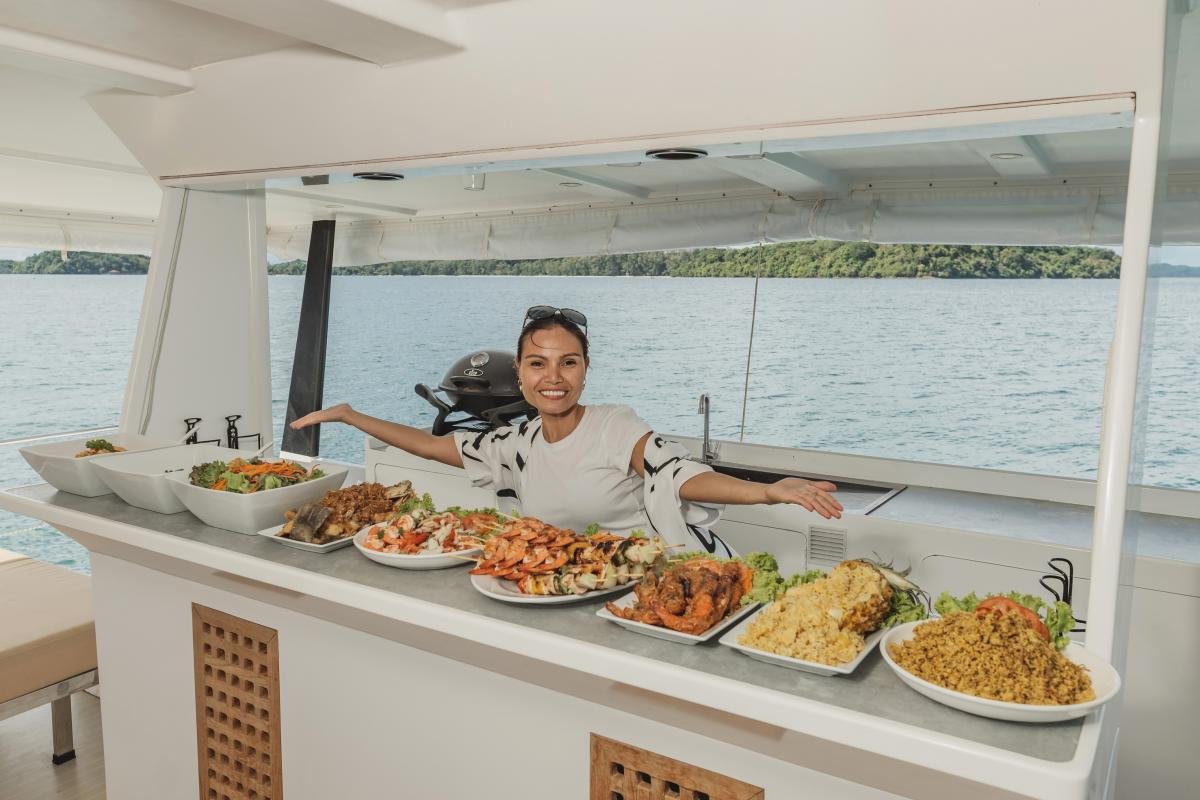
13:00 Lunch at anchor
Flat water in the lee of an island, with a swim before eating.
-
14:30 Panak or Hong island
Quieter lagoons where the kayaking is better and the crowds thinner.
-
16:30 Head back
The karsts go gold as the light drops behind them.
Phang Nga Bay
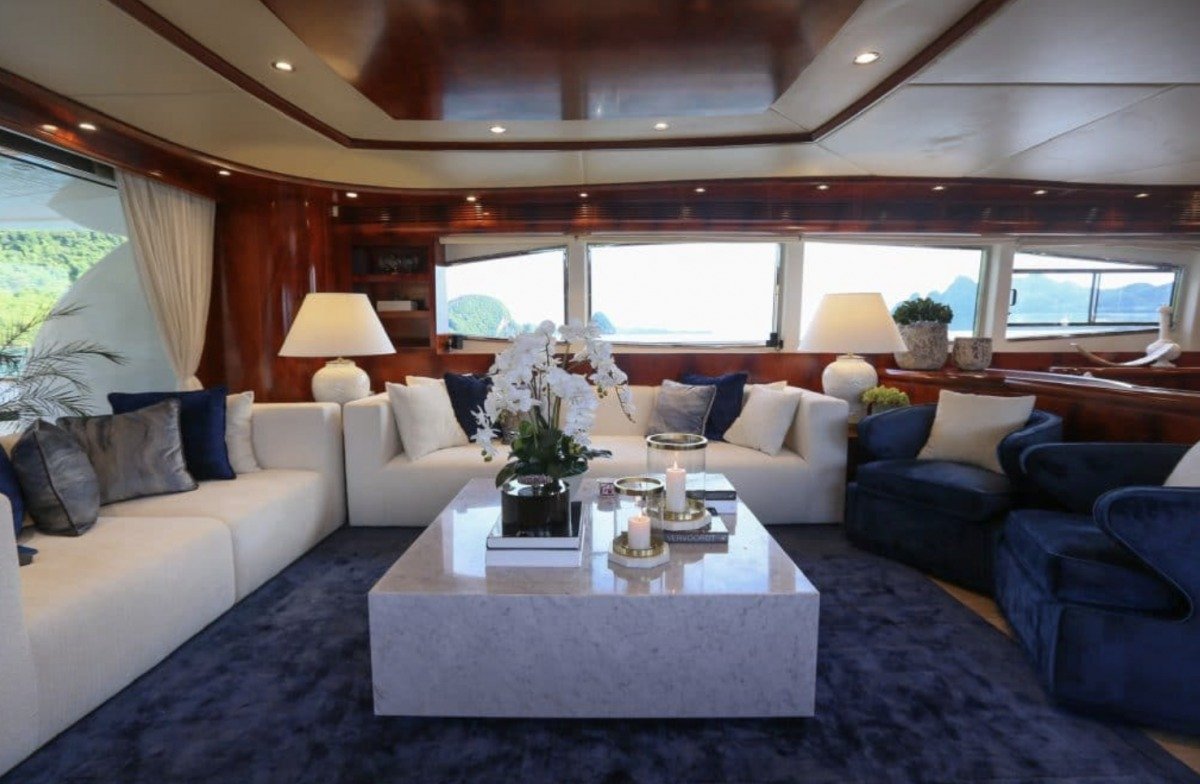
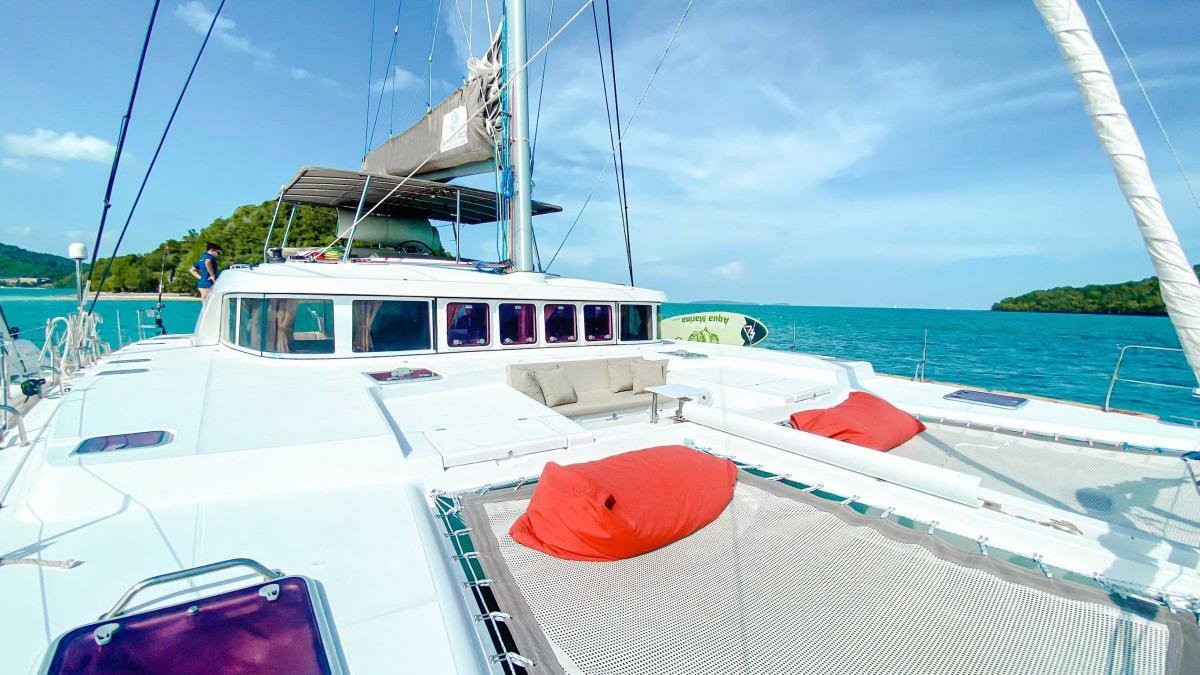
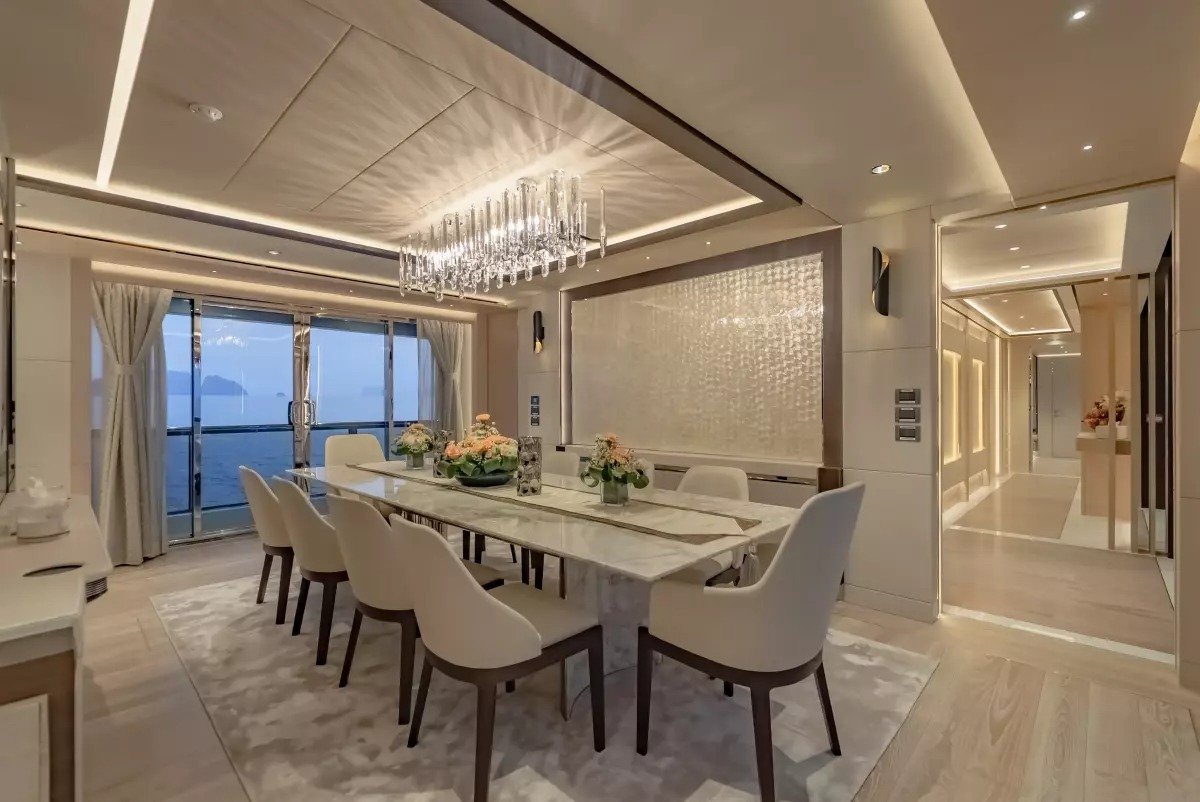
Yachts for this route
Phang Nga Bay: common questions
Is Phang Nga calmer than Phi Phi?
Considerably. The bay is enclosed and shallow, so it stays flat when the open water is not. It is the route we suggest for anyone worried about seasickness.
Do we need to be able to kayak?
No. The crew handles the paddling through the caves and you sit in the front. Lying flat for the low cave mouths is the only requirement.
Can we do this in the green season?
Yes. Phang Nga is the most weather-resilient route we run, which is why it is often the answer when May to October conditions rule out the open crossings.
Are the caves always accessible?
No, entry depends on the tide. The captain plans the day around the tide tables so you arrive when the cave mouths are passable.
Charter to Phang Nga Bay
Tell us your date and we will plan the route around your group.